
History
History Of Punjab
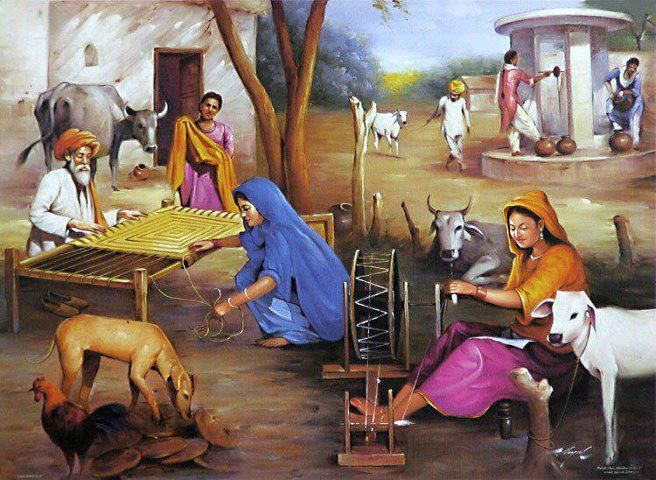
The history of Punjab dates back to the Indus civilization. The region has been invaded and ruled by many different empires and races including the Aryans, Persians, Greeks, Egyptians, Afghans, and Mongols.
The population of Punjab had been pre-dominantly Hindu with large Buddhist minorities before it was conquered by Muhammad bin Qasim in 712 AD. He was the first to bring the message of Islam to the region. It was later spread through the teachings of various Sufi saints. The Mughals controlled the region from 1524-1739. It was their reign that saw the construction of the great architectural wonders such as the Badshahi Mosque and the Shalimar Gardens.
Following the decline and subsequent fall of the Mughal Empire, Maharaja Ranjeet Singh was the most prominent ruler of the Punjab. He established the Sikh Empire that lasted from 1799-1849. During his time a lot of importance was given to the landed aristocracy and he relied upon their loyal support to retain power. However, after his death, political chaos ensued and two of his successor maharajas were assassinated in the succession struggle. The British Empire took control and annexed Punjab in 1849 after two Anglo Sikh Wars.
By virtue of its geo-political position, Punjab was one of Great Britain’s most important assets in colonial India allowing it to execute control over the numerous princely states that made up the country. The British rule saw a series of measures being introduced including the introduction of western education, a new revenue system and the establishment of a new administrative system. However, the increasing resentment of the people towards their colonial masters brought Punjab at the center of the rising rebellion. The Jallianwala Bagh Massacre of 1919 took place in Amritsar and following the Pakistan Resolution of 1940, Punjab was at the heart of the independence struggle of modern day Pakistan. During the partition of India in 1947, most of the Muslim dominated areas went on to form the present day province of Punjab while the Sikh and Hindu dominated regions formed the Indian states of Punjab, Haryana, and Himachal Pradesh.
In 1955 due to the rising tensions between East and West Pakistan, Punjab lost it province status. In 1972 however, following the secession of East Pakistan and formation of Bangladesh, it regained its standing. In 1965 and 1971, Punjab witnessed the two wars between India and Pakistan.
Geographical Overview of Punjab
The word Punjab consists of the two words “Panj” and “Aab” where Panj means five and Aab means water. This name was given to this region to symbolize its five rivers.
The Northwest location of the state and its fertile land created a strong attraction for foreign influence. Persians, Arabs, the British, and Turko-Mongolians were a few of the groups which contributed to its development. Punjab also was a nurturing ground to several religious movements such as Buddism, Sikhism, and several schools of Islam.
The historical area of Punjab was defined to the east from the basin of the river Bias to the boundary of the river Indus to the west. On the north the state was bounded by the Kashmiri Himalayas and on the south it reached the plains of Rajasthan and Cholistan. However, over history Punjab has had its boundaries expand as well as shrink. The high time for Punjab occurred under the reign of Mugal emperor Babur and the empire of Maharaja Ranjit Singh. With the partition in 1947 the borders of the region shrank to its current size, with its division into the Pakistani province of Punjab and the Indian state of Punjab
Today, Punjab remains the heartbeat of the nation and is at the center of all political and economic progress.
Location
Situated in the north-west of India, Punjab is bordered by Pakistan on the west, the Indian states of Jammu & Kashmir on the north, Himachal Pradesh on it’snort-east and Haryana and Rajasthan on it’s sout
Area
50362 square kilometers (Punjab occupies 1.54 % of the country’s total geographical area).
Capital
Chandigarh (population: 642,0000)
Population
23.51 million (P) for the year 1999
Rural: 16.56 million (70.45 )%
Urban: 6.95 million (29.55 )%
The population of Punjab consists mainly of Punjabis and Rajputs.
Occupation
More than 80 percent of Punjab is cultivated, and farming is the leading occupation. The major crops are wheat, maize (corn), rice, pulses (legumes), sugarcane, and cotton. Among the livestock raised are buffalo and other cattle, sheep, goats, and poultry. The principal industries include the manufacture of textiles, sewing machines, sporting goods, starch, fertilizers, bicycles, scientific instruments, electrical goods, and machine tools, and the processing of sugar and pine oil.
Languages
The official language is Punjabi, which is spoken by about two-thirds of the population. Many people are fluent in Hindi, English and Urdu also.
Currency
Rupee (100 paiseequals one rupee)
State Animal
Black Buck – Locally called kala hiran, the Black Buck is a graceful antelope blessed with a striking colour and spiraled horns. The fawn’s coat is yellowish but it becomes turns black at maturity. It is found in the plains and avoid forests and hilly tracks. Mostly found in herds of 20-30, large herds may number several hundreds. With a keen eyesight and speed, it responds to alarm call by leaps and bounds.
State Bird
Baz (Eastern Goshawk)
State Tree
Shisham
Geography
Find Punjab on the globe at 29’30’’ N to 32’32’’ N latitude and 73’55 E to 76’50 E longitude. Punjab lies between the Indus and the Ganges rivers. Most of the state is an alluvial plain irrigated by canals. Punjab’s arid southern border edges on the Thar or Great Indian Desert. The Siwalik Range rises sharply in the north of the state. The average temperature in January is 13° C (55° F), although at night the temperature sometimes lowers to freezing point. In June, the average temperature is 34° C (93° F), occasionally rising as high as 45° C (113° F). Annual average rainfall in Punjab ranges from 1250 mm (49 in) in the north to 350 mm (14 in) in the southwest. More than 70 percent of the annual rainfall occurs during the monsoon season i.e., from July to September.
Climate
Climatically the state has three major seasons – summer, winter and rainy season.
Major Land Features
Most of Punjab is a fertile plain; toward the southeast one finds semi-arid and desert landscape; a belt of undulating hills extends along the northeast at the foot of the Himalayas. Four rivers, the Ravi, Beas, Satluj and Ghaggar flow across the state in a southwesterly direction. They have numerous small and seasonal tributaries. In addition, Punjab is watered by an extensive canal system.
Traditional Ornaments of Punjab
Ornaments of great diversity found from archaeological sites make a fascinating study. We come across several pieces of ear ornaments, which can be divided under several groups like ear-tips, ear-studs, eardrops, earrings and ear-pendants. Bangles have been found in practically all materials known to the people of the Harappan civilization. Head and neck ornaments of gold, silver and bronze, including green jasper and burnt steatite have also been found.
It seems that for every part of the human body a special ornament has to be provided. But the significance of Punjabi jewelry lies outside of this amplitude, in variety and aesthetics. It is in fact a part of the Indian culture, a facet of its social pattern with deep religious overtones, and has to be viewed against this perspective. It is not surprising that jewelry was used as much by men as by women though more sparingly by the former.
Jewelry in India also has had social and economic implications. It is an investment as also a saving for emergencies. The jewelry given to the bride at the time of the marriage becomes her own possession. This was in addition to the love of personal adornment inherent in the women folk. But for mortal humans it also symbolizes the concept of immortality. Precious stones and precious metals, distinguished by this classification from other substance have, throughout the ages, stood for power and wealth. This concept of power and wealth, as imbibed through ornaments, seems to have remained integrated in the psyche of the Punjabi women.
Ornaments, as symbol of power, wealth and femininity, and also as an investment by the Punjabi women, are found in many varieties and forms.
An endless variety of ornaments are used in local parlance, often only locally understood and each little change in the size or pattern of an ornament merits a different name. For instance, an ornament called sagi is a central head stud that supports the phulkari or dupatta or other headgear. It is a hemispherical with raised work all over with floral patterns carved out in horizontal circles, encased in lines and dots, and a star in the center. There are half-a-dozen varieties of sagi. When at the top-center a colored stone is fixed in it, it becomes sagiuchhi. Where several round beads are hung at the edge with silver chains, it becomes motianwalisagi. When two additional sagis are linked to the upper side they are known as sagiphul. A slight variation in its shape turns it into sagichandiari. In addition to it there are more ornaments used for the head, followed by ornaments used for the ears, the neck, the arms, the fingers, the anklets and the feet. Thus the names of traditional ornaments used in Punjab run well into hundreds.
HEAD Ornaments
Men’s
Sarpesh – the jeweled aigrette worn in front of the turban,
Kutbiladar – an oval pendant worn over the forehead,
Kalgi – Plume in jeweled setting,
Mukat or Mutakh – a head dress worn by Hindus at weddings,
Turah-I-marwarid – tassels of pearls worn on the turban
Women’s
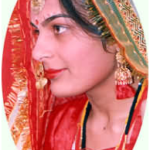
Sisphul, chaunk or chotiphul – a round boss worn on the hair over the forehead, it is cut or indented so as to resemble a gold flower like chrysanthemum.
Mauli – a long chain made of rows of pearls separated by jeweled studs, about 8 inches long hanging from the head on one side.
Sir mang – a pendant worn on the head by Hindus.
ORNAMENTS WORN ON THE FOREHEAD
By Women only
Damni or dauni – a fringe hanging over the forehead on either side of the face, some of these are richly jeweled. These are of various varieties like kutabi and sosani
Tika or kashka – small ornament on the forehead which hangs from the middle of the head on the forehead with a chain. (pendant).
Chand bina – a moonshaped pendant.
Tawit – small amulets worn on the head.
Jhumar – a tassel shaped ornament or pendant.
Guchhimarwarid – a cluster of pearls.
Bindi – small tinsel forehead ornament.
Barwata – tinsel stars worn over the eyebrows, not to be confounded with Bhawata, an armlet.
EAR Ornaments
Men’s
Bala – very large ring worn by Khatris, Sikhs and Dogras, they have a pearl strung on the gold wire of which they are made.
Murki – smaller earrings of the same shape.
Dur – a small earring with three studs.
Birbali – a broad earring with three studs.
Durichah – an ear-ring with pendant tassel
Women’s
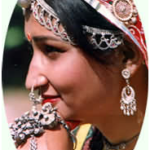
Bali or Goshwara – a set of rings worn on the edge of the ear.
Bali Bahaduri – it has a large pointed stud in the center.
Karnphul, Dhedu and Jhumka – all forms of tassel like ornaments, made with silver chains and little balls.
Pipal-watta, or PipalPata – like a murki, but has a drop or pendant to it ending in a fringe of little gold pipal leaves.
Kantala – A similar ornament like pipal-watta but this has a stud besides the pendant.
BalaKhungri – a heavy fringed earring.
BalaKatoriwalla – an earring with a bowl-like pendant.
Khalli – small earring;
Jalil – A small earring with a small jeweled central stud.
Phumni – silk and tinsel tassels.
MachhMachlian – a small gold figure of a fish worn as an earring.
Tid-patang – a crescent shaped jeweled pendant. Along the lower edge of the crescent hangs a row of gold pipal leaves.
Tandaura, Dedi – a huge star-shaped jeweled stud.
MorPhunwar – pendant of jewels being an imitation of the figure of a peacock.
NOSE Ornaments
Women’s
Nath – a large nose ring, one side of ring being ornamented with a belt of jewels or a few pearls hung on to it.
Bulak – a small pendant either worn hung to the cartilage of the nose, or else strung to a nath.
Latkan – a sort of ornament of pendants put on to the thin gold ring called a nath, and hanging from it.
Morni – a small pendant for the above, shaped like the spread out tail of a peacock.
Laung – a small stud let into the flesh of the nostril on one side, generally of gold, with a pearl or turquoise on it.
Phuli – a small ring with a single emerald, or other stone of an oval shape, as a pendant.
Bohr – a dangling pendant of gold pipal-leaves.
NECKLACES AND NECK ORNAMENTS
Men’s
Mala – a necklace of large beads handing down long and loose.
Kanth-kanthi – this fits rather close to the neck, the pendant may be omitted. This is also worn by women.
Nam – an amulet, round or star shaped, suspender from a twist of colored silk thread fastened round the neck by tying at the back, nearly like jugni.
Tawiz – a square amulet, jeweled or otherwise.
Takhti – a flat square plate engraved with figures etc.
Zanjiri – a set of chains.
Chandarmah – a large gold flat medal suspended by a single ring on a silk chair or cord.
Women’s
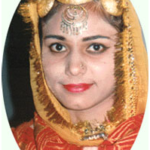
Chandanhar – a collar or necklace of a great number of chains.
Mala – a plain necklace of pearls or gold bead, hanging down long.
Champakali – a necklace like a collar with pendants, the pendants or rays are either of plain metal or set with stones.
Jugni – a single jeweled pendant, hanging from a necklace of silk and elongated in shape.
Mohran – a gold mohur or coin hung by a silk necklace.
Haul Dil – a sort of amulet of jade cut in curves round the edge.
Hassi or Hass – like a torque, a ring or collar of silver, thick in the middle and thin at either end.
Guluband – a jeweled collar.
Mohnmala – a long necklace made of large gold beads, with an interval of gold twisted thread between each bead.
Atradan – a square jeweled or plain gold pendant attached to a silk chain.
Kandi – a chain of silk carrying amulet cases.
Silwatta – an amulet case, shaped like a small gold pillow or bolster, with two rings suspended from it.
ARM AND NECK ORNAMENTS
Bazuband – a broad belt-like ornament generally mounted on silk and tied on the upper arm.
Nauratan – almost like bazuband, the ornament consisting of a band of nine gems set side by side and tied by silk ties.
Taviz – an amulet worn on the upper arm.
Anant – meaning endless, a large thin but solid ring of gold or silver, used chiefly by Hindus.
Bhawatta – a square gold ornament, worn on the upper arm.
BRACELETS AND NECK
Men’s
Ponchi – a series of strings of shells or small gold elongated beads worn on the wrist.
Kangan or Kara or Gokru – a bracelet of stiff metal, when the edges are serrated, it is called gokru.
Women’s
Ponchian – worn on the wrist, which are a several categories called kutbi, chuhadandi (the beads like a rat’s teeth), iliachdana (like cardamom grains) etc.
Kangan – worn on the wrist are generally of gold.
Banka – thick gold bracelets, mostly used by Hindus.
Gajra – a flexible bracelet made of square gold studs mounted on a silk band.
Churi – of several varieties generally made of a flat ribbon of gold or silver, bent round.
Bain – long silver sleeve or tube worn on both arms, like a lot of churis fastened together.
Band – an armlet, broad and heavy.
Jhankangan – small hollow karas with grains introduced into the hollow to rattle.
FINGER RINGS
Anguthi – a ring set with stones also called mundri.
Challa – a plain hoop or whole hoop ring, with or without stones, being of gold or silver, but the same all round, challas are worn on the toe also.
Angutha – a big ring with a broad face worn on the toe.
Khari Panjangla – a set of finger rings of ordinary shape.
Shahelmi or Khari – a ring of long oval shape.
Birhamgand – a broad ring.
ANKLETS
Pahzeb – various ankle ornaments made with chains and pendants of silver, which clink together when the weaver walks.
Chanjar – a large hollow ring which rattles when the wearer walks.
Kharian-apir or khalkhal – like karas worn on the ankles.
Khungru – a ring or ankle of long ornamental beads of silver worn on the feet.
Zanjiri – a set of chains with broad clasp, also known as tora.
ANKLETS Ornaments of Punjab
Rig-Veda, the oldest book in the world, mentions ornaments worn by the gods. Rudra, a Vedic deity, is described as “shining with brilliant gold ornaments” and “wearing” an adorable, uniform necklace”. According to this book the demons also had plenty of gold and jewels and the kings and sages prayed to the God for valuables of that kind. Kakshivat, the sage, prayed for a son “decorated with golden earrings and jewel necklace”.
No doubt jewellery making is an ancient craft that goes back to the cave man and its popular use in ancient India is well established.
Jewellery in India also has had social and economic implications. It is an investment as also a saving for emergencies. The jewellery given to the bride at the time of the marriage becomes her own possession called stridhan, woman’s wealth. This was in addition to the love of personal adornment inherent in the women folk. But for mortal humans it also symbolises the concept of immortality. Precious stones and precious metals, distinguished by this classification from other substance have, throughout the ages, stood for power and wealth. And this concept of power and wealth, as imbibed through ornaments, seems to have remained integrated in the psyche of the Punjabi women through the ages and remarkably so despite a stream of war and rapine that marked the life of the people of the land of five rivers with continuous vicissitudes.
Ornaments, as symbol of power, wealth and feminity, and also as an investment by the Punjabi women, are found in many varieties and forms. B.H. Baden-Powell, in his book Handbook of the Manufactures and Arts of the Punjab, published in 1872, lists 97 names of ornaments used in Punjab. And this list is by no means exhaustive, because an endless variety of ornaments are used in local parlance, often only locally understood, and each little change in the size or pattern of an ornament merits a different name.
The reason for the prolification of names is the multiple variations of the same piece of ornament. For instance, an ornament called sagi is a central head stud that supports the phulkari or dupatta or other headgear. It is a hemispherical boss with raised work, all over with floral patterns carved out in horizontal circles, encased in lines and dots and dashes, and a star in the centre. Now there are half-a-dozen varieties of sagi. When at the top-centre a coloured stone is fixed in it, it becomes sagiuchhi. Where several round beads are hung at the edge with silver chains, it becomes sagimotianwali. When two additional sagis are linked to the upper side they are known as sagiphul. A slight variation in its complex shape turns it into sagichandiari. When green or blue enamelling is done on it, it becomes sagimeenawali. This ornament is also known as sisphul, chaunk or chotiphul.
In addition to it there are more ornaments used for the head, followed by ornaments used for the ears, the neck, the arms, the fingers, the anklets and the feet. Thus the names of traditional ornaments used in Punjab may well run into hundreds. According to the handbook of Manufactures and Arts of the Punjab, there is a complete range of traditional jewellary worn by the Men and Women of Punjab, not only for the enhancement of physical beauty but also for the retainment of the traditional Punjab culture.
Athough ornaments are much influenced by changing fashions, their continuity remains alive by peridocial revivals. And this is also true of the ornaments used by Punjabi Women, for many discarded designs have recently been gaining a fresh popularity. Some designs, however, remain always in vogue.
Gold has remained the most valuable as well as the most prominent metal for making ornaments. It was procured from several sources. According to Monograph on the Gold and Silver Works of the Punjab, compiled by E.D. Maclagan, and published in 1890, gold was procured from several sources. Its local source has been several of the small seasonal rivulets that descend from lower reaches of Himalaya and the Shivalik range of mountains. But the gold found in the sand of rivers has been – quite insignificant, and has had to be imported. The English, Australian and European gold was termed locally as passa and it came in the form of a lump or ingot. Panna or patra is the gold in the form of leaves. When old ornaments are melted down and sold in lump they appear in various sizes and shapes with various rates, and is known as desi passa.
Several types of coins used to be melted and then made into ornaments in Punjab, such as Russian mohar, Jaipur mohar and ashrafi, Dutch ducats, Aurangzeb mohar, old mohars of Murshedabad and Farrukhebad etc. Russian gold was imported largely in the shape of five-rouble pieces, known as battis. The purest gold of all is known as kundan and is used for beating out gold leaves. It is also very generally used in setting stones, whence the seller of stones or murassakar is often known as kundansaz.
The interest in getting ornaments of gold has not dwindled despite the fact that the price of the gold has gone up more than three thousand times in nearly a hundred years. One may not be inclined to believe that the prices of gold ornaments as recorded in the North Indian Notes and Queries of January 1892 were as under:
Kara sada, or plain bracelet., 2 annas per tola of gold, of which 1/2 anna went to the goldsmith; karajarau, orjewelled bracelet, one rupee per tola, of which the goldsmith took half; gokharu or serrated bracelet, two annas a tola; bahi or solid tube-like armlet, 6 annas per tola, of which the goldsmith took half; paunchi or beaded wristlet, 12 annas per tola; bazuband, 12 annas a tola, of which the goldsmith got rupee one a pair.
After gold, the next metal of priority was the silver. The only source of its local availability was Waziri Rupi Mines in Kulu which have now been worked for many decades. Most of the.silver, therefore, was imported from Europe into Amritsar via Bombay. Chinese silver was also imported. The coin most commonly melted for silver was the Nanakshahi or Sikh rupee, the silver of which was very commonly used for ornaments. More modern Sikh coins were known to the trade as Rajshahi and mainly represented by Patiala coinage. The Nandrami rupee from Kabul was used in the western districts, and was considered the next best silver after the Nanakshahi. Shah Shuja’s and Dost Muhammad’s coins were also held to be the best and were much in use in making ornaments on the frontier. Silver prepared from melted ornaments was also in use.
The gold and silver work, as far as the plain form of the article required, or as far as it can receive the required pattern by merely hammering on to a die or into a cold mould, is done by the sunar or gold-smith. If the ornament has then to be ornamented with bossed patterns, it goes to the chatera, the embosser and chaser. If jewels are to be set, the enamelling at the back is done by a minakar, and then the stone is set into the places prepared by the goldsmith by the marassiakar or kundansaz, whose sole ork consists in putting some lac into the receptacle or hollow in the gold prepared to receive the stone, putting on a tinsel or foil prepared by the bindligar and then pressing in the stone, putting an a gold rim to keep it in place.
Who can resist the spell that is cast by the sparkle of a precious stone, by the mysterious glow of a pearl, or by the transcendent purity of gold . It has been said the ‘purpose of ornaments is to light a kind of fire in a women’s heart’, it is, therefore, equally important to get ornaments made of pure metal.

Recent Comments